From Farmland to Photographic Powerhouse
In 1890, a patch of farmland in Wealdstone, then a rural corner of Middlesex, was transformed into something extraordinary. Kodak purchased seven acres of land along Headstone Drive and, within a year, opened its first manufacturing facility outside the United States. The Kodak Harrow factory would go on to shape the local landscape, employ generations of Harrow residents, and produce the film that captured Britain's most cherished memories for 125 years.
The factory initially developed and printed customer photographs. By the 1950s, it had expanded to 55 acres with more than 100 buildings, becoming the largest manufacturing plant in the British Commonwealth. At its peak in the 1950s, the site employed 6,000 people; by 1965, this figure stood at 5,500. Approximately a quarter of the workforce lived in Harrow itself, with others commuting from Hemel Hempstead, Watford, and surrounding areas.
Research, Innovation, and Hidden Histories
The Harrow site was more than a production facility. In 1929, Kodak established a research laboratory that would serve as the company's European research centre, competing with Kodak's headquarters in Rochester, New York. The laboratory contributed to photographic innovations used across the continent.
Less well known is the factory's secret role in government contingency planning. During the 1930s, some buildings on the site were earmarked as a potential hiding place for government officials and civil servants. The British government used the facilities secretly in the years before the Second World War, a detail that remained obscure for decades.
The site also housed more whimsical operations. In the 1890s, approximately 100 chickens were kept at the factory to produce egg white, which was used for coating printing paper. A Kodak Museum opened on the site in 1927, operating until 1985. Its collections are now held at the National Science and Media Museum. In 1935, Kodak F.C. was formed for factory workers; the football club continues today, playing in the Middlesex County Football League.
The Decline of Film
The rise of digital photography brought an irreversible decline in demand for traditional film products. Film production at Harrow ended in 2005, with the loss of 600 jobs; 1,400 employees remained. Following Kodak's bankruptcy in the United States in 2012, Kodak Alaris took control of the Harrow site. By 2013, Harrow had become the global manufacturer of all Kodak colour negative paper.
On 13 April 2016, Kodak announced the factory's closure. Brian McGowan, head of operations, cited a "drop in demand coming into the factory over the last 18 months" and stated the site was "unable to develop a viable business plan for future." Only 250 people were still employed at the site by this time.
The factory closed its doors in December 2016, ending 125 years of continuous operation. Emotional farewells marked the final months, with staff departing through October 2016, December 2016, and January 2017.
A Landmark Transformed
The factory's 213-foot chimney became an iconic feature of the Harrow skyline. When developers Barratt London and Hyde Group purchased the site for redevelopment, local campaigners successfully pressed for the chimney's retention. It may yet become a community space as part of the new development.
The redevelopment, named Eastman Village in homage to Kodak founder George Eastman, received planning approval for up to 2,000 new homes, a school, shops, a health centre, and commercial space. Harrow View West, comprising 500 homes, gained approval in 2015. Harrow View East, with 460 homes, followed in 2017. Demolition began in 2018. A new park is being created through the estate.
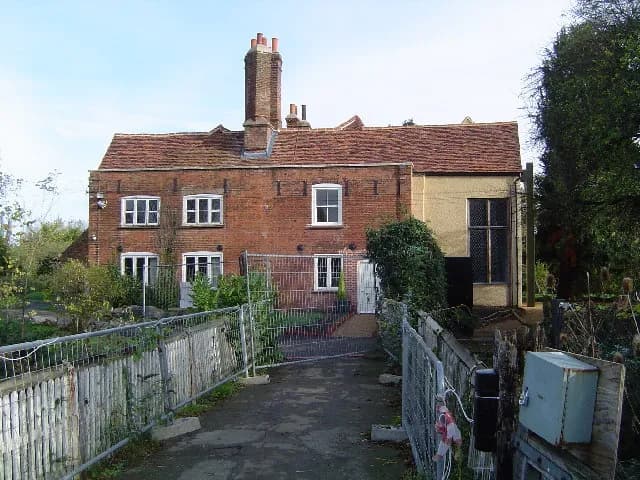
Headstone Manor Museum now houses a collection of items relating to the Kodak factory, preserving something of its legacy for future generations. The Kodak Sports Ground, which once offered tennis courts and rifle ranges to employees, saw its final chapter when the Nuffield Health leisure centre operating there closed in 2011.
What Remains
The Kodak Harrow factory represented more than bricks and production lines. For 125 years, it provided stable employment, fostered a distinct community identity, and contributed to Britain's photographic heritage. Its closure marked the end of an era not only for Harrow but for traditional film manufacturing in the United Kingdom.
As Eastman Village rises on the Wealdstone site, the chimney stands as a reminder of what came before: an American company's ambitious gamble on English farmland, a wartime secret, thousands of livelihoods, and the film on which generations recorded their lives. The factory may be gone, but its place in Harrow's history is fixed.