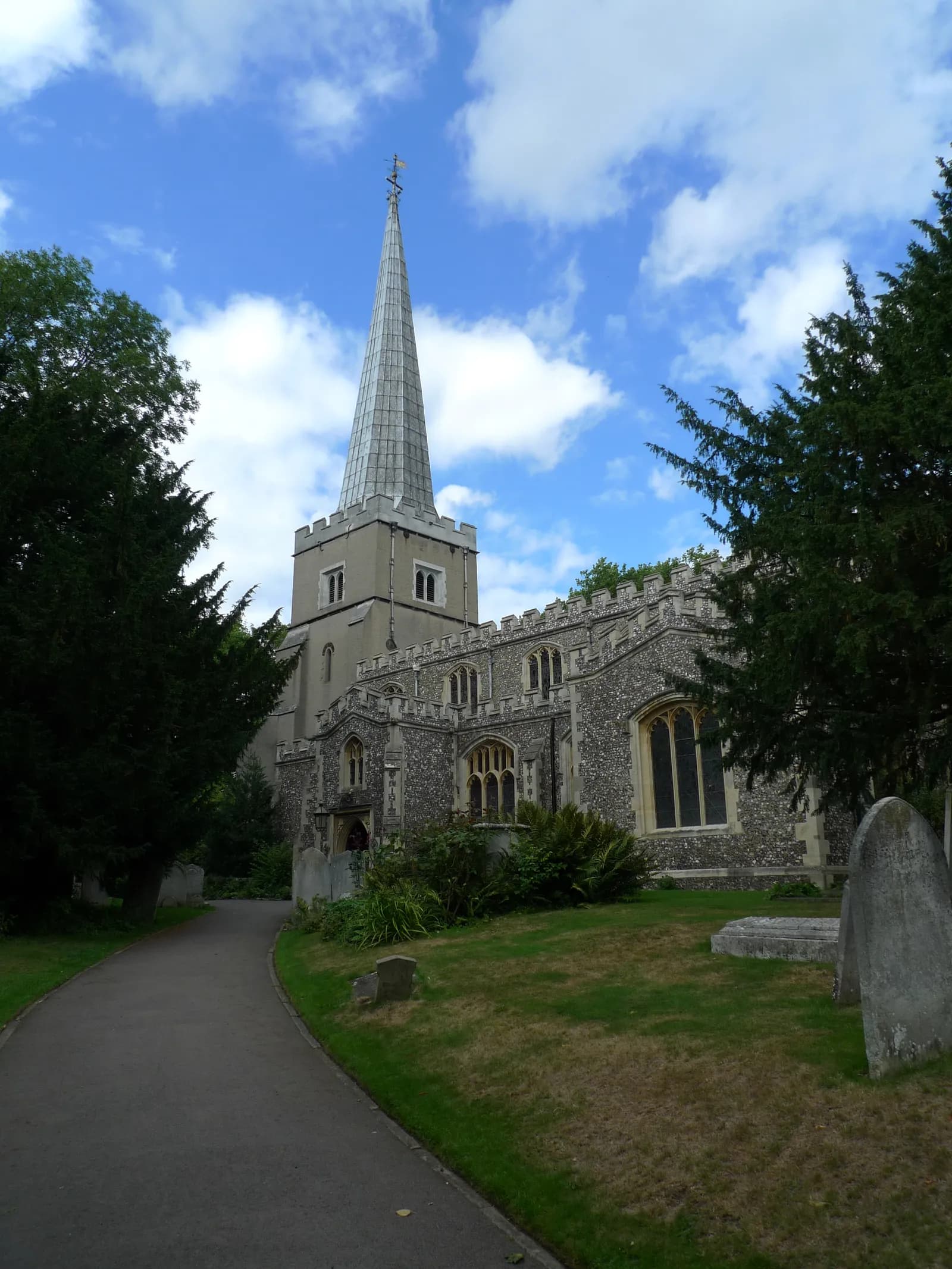
Harrow sits at the intersection of tradition and transformation. This north-west London borough, home to more than 261,000 residents, carries within its 19.5 square miles a remarkable range of stories: from the Gothic spires of Harrow School to the bustling retail corridors of Wealdstone, from medieval manor houses to cutting-edge regeneration projects. Harrow Magazine exists to document this diversity, to surface the issues affecting local residents, and to celebrate what makes this corner of Outer London distinct.
The Shape of the Borough
The London Borough of Harrow, created on 1 April 1965, is unique among London's local authorities. It is the only borough formed from a single predecessor district, the Municipal Borough of Harrow, which itself had incorporated in 1954. Geographically, it occupies a position roughly 9.5 miles north-west of Charing Cross, bordering Barnet to the east, Brent to the south, Ealing to the south-west, Hillingdon to the west, and the Hertfordshire districts of Three Rivers and Hertsmere to the north.
Three distinct towns comprise the borough: Harrow proper, Pinner to the north, and Stanmore to the north-west. Each possesses its own character. Pinner retains a village atmosphere with over 50 listed buildings in its ward alone. Stanmore, perched on higher ground, offers access to extensive green spaces including Stanmore Common and Bentley Priory Nature Reserve. Harrow itself functions as the administrative and commercial centre, anchored by its hilltop historic core and spreading across the valleys below.
A Profile in Diversity
The 2021 Census revealed Harrow as one of Britain's most diverse local authority areas. The borough's population of 261,205 includes a 63.8% black and minority ethnic population, one of the highest proportions in Outer London. Gujarati Hindus and Sri Lankan Tamis are particularly well-represented; Harrow contains the highest density of Gujarati Hindus and the largest concentration of Sri Lankan Tamils anywhere in the United Kingdom and Ireland.
This diversity extends to religious practice. According to Office for National Statistics data from 2006, Harrow holds the distinction of being the most religiously diverse local authority area in the UK; there is a 62% probability that two randomly selected residents will follow different faiths. The 2021 Census broke this down further: 33.9% Christian, 25.8% Hindu, 15.9% Muslim, 10.6% with no religion, 2.8% Jewish, and 2.4% Jain. Places of worship range from St Mary's Church, consecrated in 1094 by Anselm of Canterbury, to contemporary temples and mosques serving the borough's newer communities.
The Metro-Land Inheritance
Harrow's modern identity owes much to the Metropolitan Railway. When Harrow-on-the-Hill station opened in 1880, it triggered a housebuilding boom that transformed the area from rural Middlesex into the archetypal London suburb. The railway company's "Metro-land" marketing campaign of the 1920s and 1930s cemented Harrow's reputation as a desirable residential location, promising "tudor-style" homes set amid greenery within easy reach of central London.
That suburban character persists. The borough possesses the second-highest proportion of domestic gardens in England, with 34.7% of land area given over to private green space. Harrow Park, landscaped by Capability Brown and Henry Holland, survives as part of Harrow School's estate. Public parks include Harrow Recreation Ground, Canons Park, and the substantial grounds around Headstone Manor.
Yet Harrow is anything but isolated. Thirteen railway and Underground stations serve the borough, including termini for both the Bakerloo and Jubilee lines. The London Overground shares track with the Bakerloo line between Queens Park and Harrow & Wealdstone, continuing north to Watford Junction. In 2011, driving remained the dominant commute mode at 27.5%, but public transport usage collectively exceeded 16%.
Commerce and Regeneration
Harrow functions as one of London's 13 designated metropolitan centres under the London Plan. Its retail offering centres on two major shopping centres: St Anns, which opened in September 1987 and was officially launched by Diana, Princess of Wales, that November; and St George's, opened on St George's Day 1996. Between them, they house approximately 70 retail units, anchor tenants including Marks & Spencer, Primark, TK Maxx, and Boots, plus a 12-screen Vue cinema. Annual footfall at St George's alone reaches 8.9 million.
The borough's economic history, however, extends beyond retail. Wealdstone served as an industrial hub, hosting the first Kodak factory outside the United States from 1891 until its closure in 2016. At its peak, the 55-acre site employed 5,500 people. Other notable manufacturers included Winsor & Newton, the art materials company, and Whitefriars Glass. This industrial legacy is preserved at Headstone Manor and Museum, whose 15,000-object collection includes material from Kodak and the Hamilton paint factory.
Today, the borough faces the challenge of regeneration. The council's Corporate Plan for 2026/27, titled "Restoring Pride in Harrow," outlines over £1 billion in planned investment across Harrow, Wealdstone, and the Station Road corridor. Completed projects include Harrow Square, delivering 318 apartments and a new 19-storey library tower; Bradstowe House, an 11-storey luxury apartment block finished in 2016; and Trident Point, combining an eight-storey residential development with a Morrisons superstore. The 1970s-era Civic Centre is slated for demolition and replacement with housing, with council meetings relocating to Harrow Arts Centre in 2022.
Heritage and Culture
For a relatively compact borough, Harrow possesses an extraordinary concentration of historic buildings. St Mary's Church, founded in 1087 and consecrated in 1094, remains the highest building in the former county of Middlesex, its spire covered with 12 tons of lead. The churchyard contains memorials to notable figures including Lord Byron, who attended Harrow School.
That school, founded in 1572 by John Lyon under a Royal Charter from Queen Elizabeth I, occupies a position of significant cultural importance. Its alumni include seven British Prime Ministers, among them Winston Churchill, Robert Peel, and Stanley Baldwin, as well as India's first Prime Minister Jawaharlal Nehru. The school maintains its traditional practices, including the annual "Harrow Speech" and the distinctive straw boater uniform.
Headstone Manor, a Grade I listed timber-framed building dating to approximately 1310, stands as the oldest surviving domestic structure in Middlesex. Surrounded by a moat and accompanied by a Grade II listed Great Barn from 1506, the complex now houses a museum exploring the area's social and industrial history. Nearby, the Grade II listed Bentley Priory, built in 1766, served as RAF Fighter Command headquarters during the Battle of Britain; it opened as a museum in September 2013 under the patronage of Prince Charles.
More recent cultural additions include the Heath Robinson Museum, opened in October 2016 in Pinner Memorial Park. Purpose-built at a cost of £1.3 million, partially funded by the Heritage Lottery Fund, it houses approximately 1,000 works by the artist and illustrator William Heath Robinson. Harrow Arts Centre, located in the 1904 Elliott Hall in Hatch End, provides the borough's only dedicated performing arts venue, with a 438-seat main hall and 120-seat studio.
What Harrow Magazine Will Cover
This publication will approach Harrow with the same combination of specificity and breadth that characterises the borough itself. Readers can expect coverage of planning decisions affecting their streets, profiles of local businesses and community organisations, updates on transport infrastructure, and features on the area's history and culture.
The magazine will pay particular attention to the tensions shaping Harrow's future: between preserving green space and delivering housing, between maintaining suburban character and attracting investment, between serving established communities and integrating newer residents. Harrow's identity as the "capital of Metro-land" now sits alongside its status as one of Britain's most diverse communities; both legacies demand sustained journalistic attention.
Whether you have lived here for decades or arrived more recently, whether your concern is the state of the pavements on your road or the future of the borough's cultural institutions, Harrow Magazine aims to provide reporting that is accurate, relevant, and grounded in this specific place. The stories that follow will examine Harrow as it is, without promotional gloss or outside perspective. This is a magazine for people who live here, written with their interests in mind.